Aches are common, but you don't have to simply endure them. Safe, gentle movement can carry you to the finish line.
Team BuddingWondersFree7 min read
If your back aches, your hips twinge, or someone has told you this is “just part of pregnancy,” I want to gently push back on that.
Yes, aches are incredibly common. More than half of us get back pain in pregnancy, and around one in five get pelvic pain. But common does not mean you must suffer through it. Safe, gentle movement is not only allowed in pregnancy, it genuinely helps: easing pain, lifting your mood, improving your sleep, and even supporting an easier birth and recovery.
Movement is good for you, truly
For an uncomplicated pregnancy, the guidance is to aim for around 150 minutes of moderate movement a week, which is roughly half an hour on most days. This is linked to less back and pelvic pain, better sleep and mood, a lower risk of gestational diabetes, and often shorter labours and gentler recoveries.
You do not need to take up anything new or intense. Walking, swimming, prenatal yoga, and gentle strength all count beautifully. The best exercise is simply the one you will actually enjoy and keep doing.
What is safe, and a few things to skip
Safe to continue throughout, in an uncomplicated pregnancy: walking, swimming, prenatal yoga or Pilates, and gentle strength work. A few gentle cautions worth knowing:
- After around 16 weeks, avoid lying flat on your back for exercise.
- Skip anything with a real risk of falling, contact sports, and getting overheated (so no hot yoga).
- Avoid heavy lifting and deep twisting movements.
- Golden rule: if a movement does not feel right for your body, ease off it.
Gentle moves for back and pelvic aches
These are broadly safe and genuinely soothing. Keep them all slow and gentle, never forced:
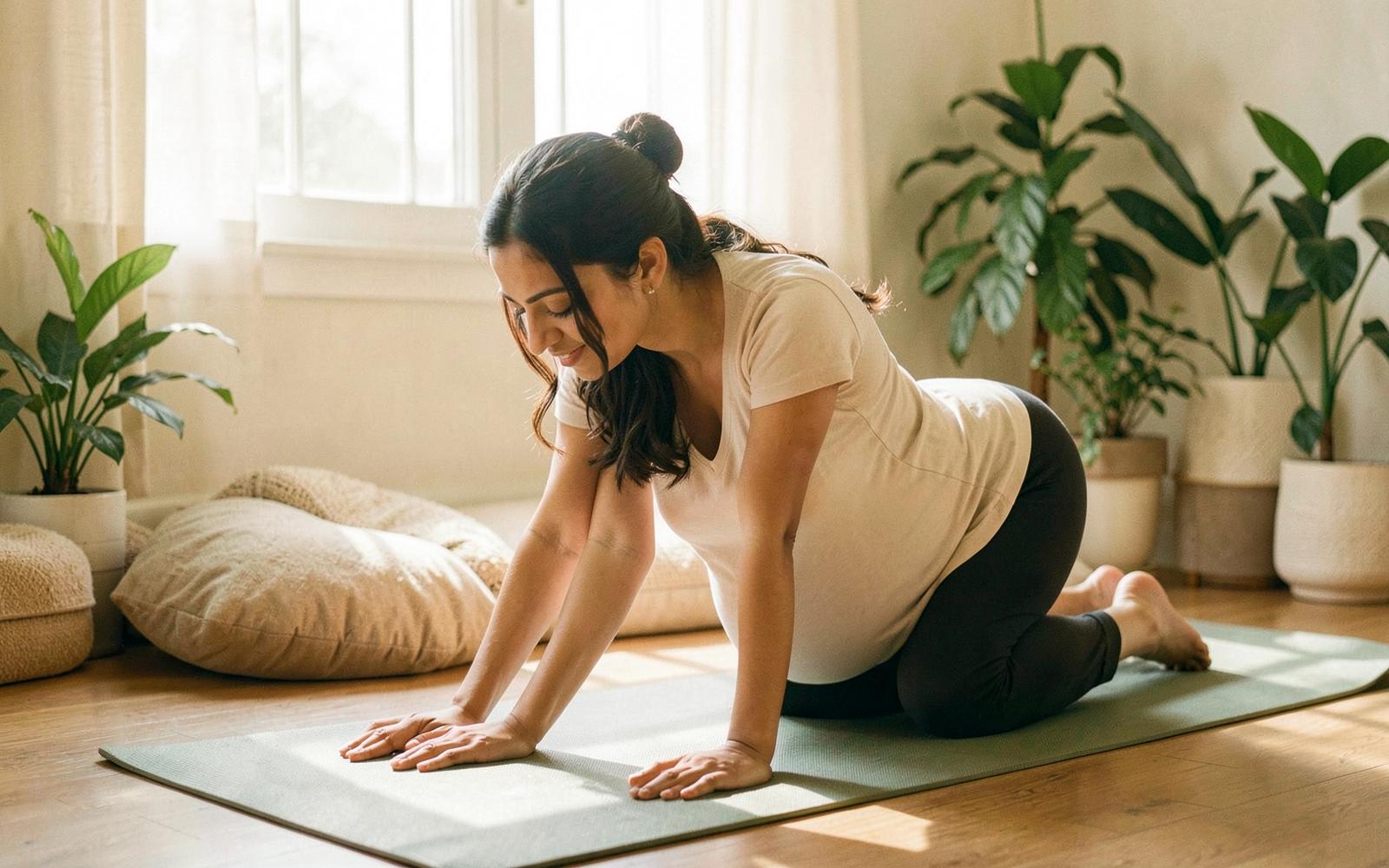
- The cat-cow: on all fours, slowly arch and then round your back in time with your breath. This is the single most helpful move for pregnancy back pain. A few gentle rounds through the day.
- Pelvic tilts: gently tuck your tailbone and flatten your lower back, then release. You can do this on all fours, sitting, or standing against a wall.
- Side-lying rest: sleeping on your side, often the left, with a pillow between your knees, eases a lot of night-time back pain.
- A support belt: for pelvic girdle pain, a simple support belt can bring real relief when you are walking or standing.
Your pelvic floor, and preparing for birth
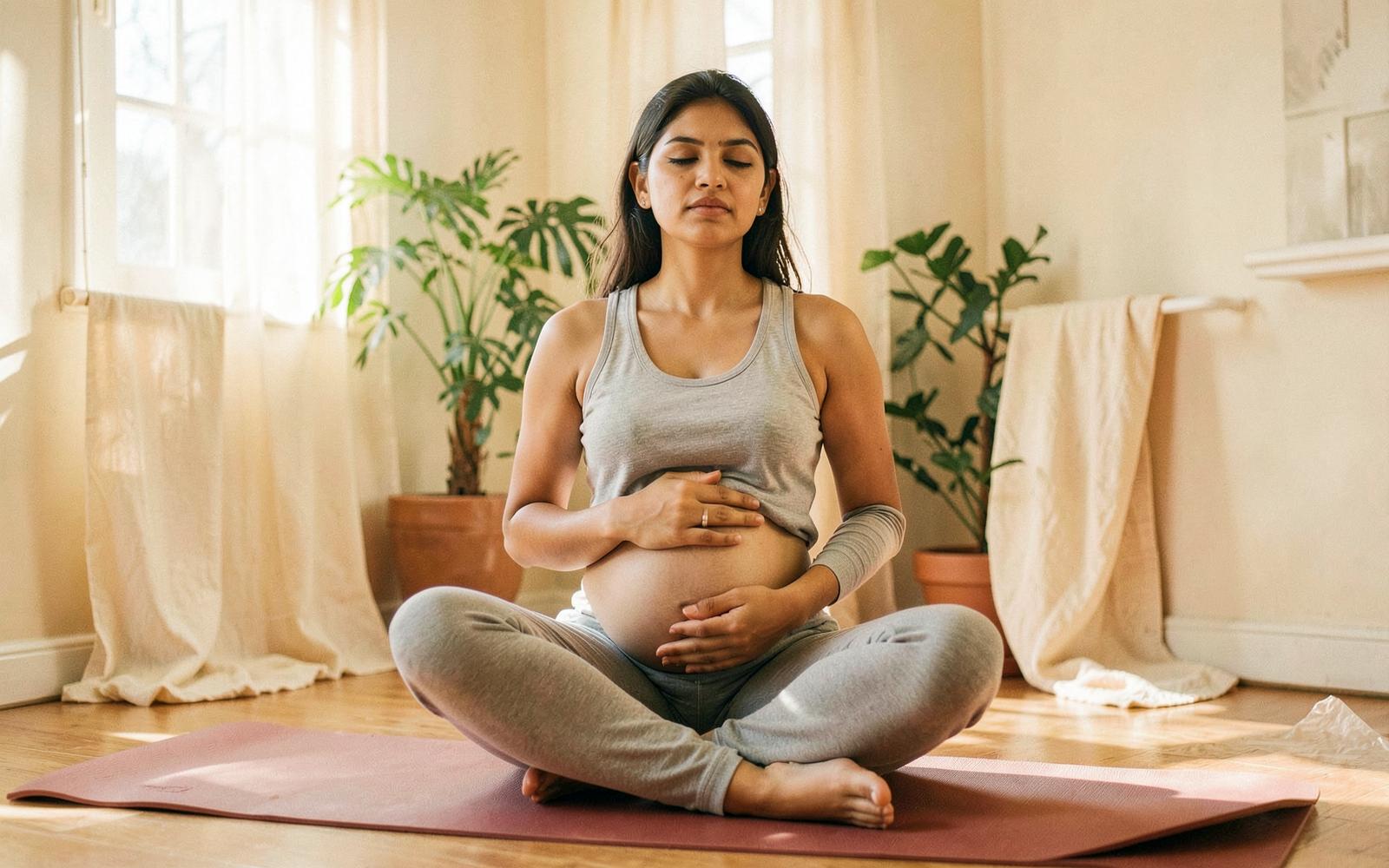
Pelvic floor exercises in pregnancy can reduce the risk of leaking by up to half, which is well worth it. But it is not only about squeezing. Learning to relax and lengthen the pelvic floor matters just as much, especially for birth, where the pushing stage asks these muscles to release, not grip.
Because every body needs something slightly different here, some more strength, some more release, this is one area where a proper assessment with a physiotherapist is genuinely valuable, rather than guessing from a video.
When to see your doctor or a physiotherapist
Please do not simply grit your teeth through pain. It is worth seeking help for:
- Pain that is severe, or that is stopping you walking or sleeping.
- Any leaking, or a heavy, dragging feeling low down.
- And urgently, contact your doctor straight away for: any bleeding, regular tightening or contractions, a gush of fluid, or a change in your baby’s movements.
In closing
You are carrying and growing a whole person. Of course your body feels the effort of it. But you do not have to endure these months with your teeth gritted.
With gentle movement and the right support, this stretch can feel so much kinder. Listen to your body, move gently, and never hesitate to ask for help. You deserve to feel as comfortable as you possibly can.
Written by Dipti, Physiotherapist, for BuddingWonders.
Found this useful? Share it with a parent who needs it.
You might also find helpful
Note. This content is for general educational purposes only and is not a substitute for personalised medical advice. Always consult your own doctor about anything specific to you or your child. Read our full Disclaimer.