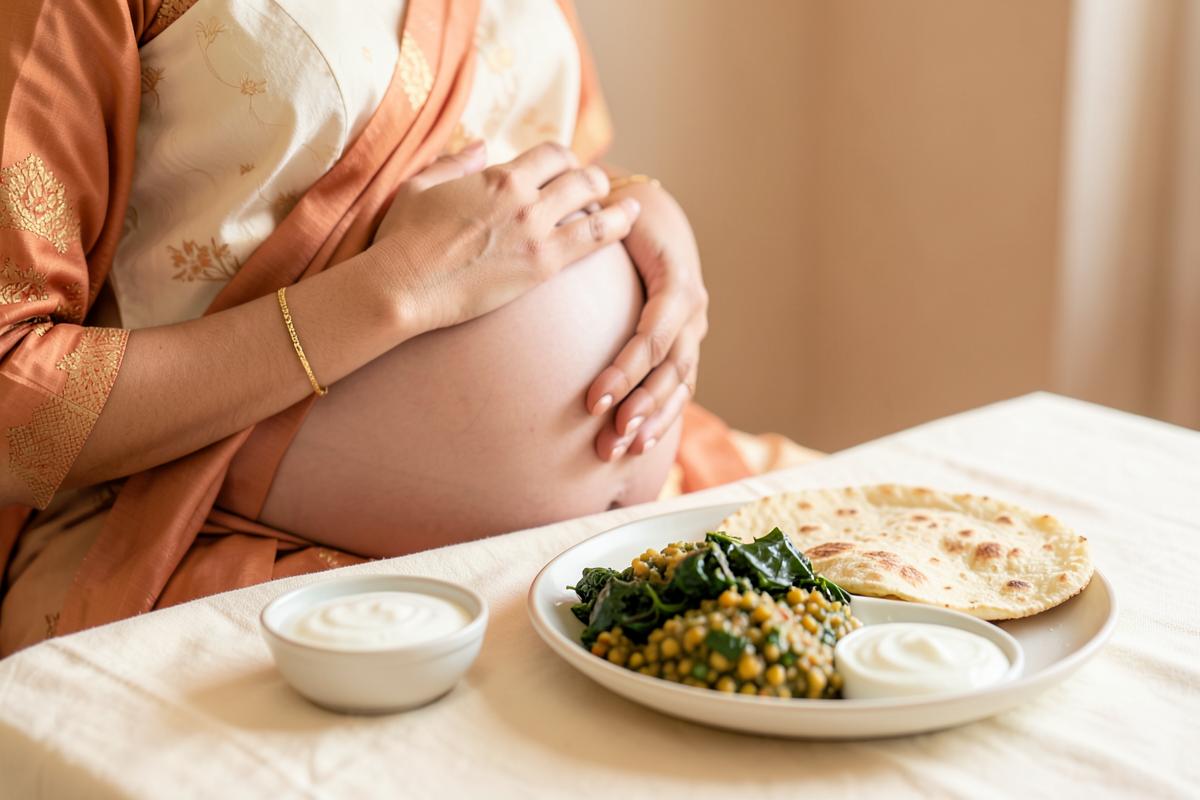
Not “eating for two,” but eating twice as well — the nutrients that build your baby, and the foods to be gentle with.
Team BuddingWondersFree8 min read
If you have been told to “eat for two,” I would love to gently retire that phrase for you. Pregnancy is not about eating twice as much. It is about eating twice as well. Your body actually needs only a little extra energy, but it does need more of certain key nutrients, the true building blocks of your growing baby. Let us make that simple, and firmly rooted in the Indian kitchen you already cook from.
The “eating for two” myth, gently corrected
Here is the truth that surprises most people. You need only around 300 extra calories a day, and only from the second trimester onwards. That is roughly a fruit and a small handful of nuts, not a second dinner.
So the better phrase is: eat twice as healthy, not twice as much. Reach for nutrient-dense food rather than simply more food. Quality is what your baby is built from, not quantity.
The nutrients doing the building
A few nutrients rise in importance now. The lovely news is that your everyday Indian kitchen covers most of them:
- Iron: your needs nearly double in pregnancy, and anaemia is very common in India. Load up on greens (palak, methi, bathua), dal and jaggery, and pair them with vitamin C (lemon, amla, tomato) to absorb the iron well.
- Folate: keep it going, for your baby's brain and spine. Leafy greens, dal, and citrus are your friends.
- Calcium: for your baby's bones, and to protect your own. Curd and dairy, ragi, and sesame (til) are excellent sources.
- Protein: needs rise, especially in the third trimester when your baby grows fastest. Dal, paneer, curd, eggs, sprouts and soya, spread across the day rather than all at dinner.
- Omega-3 (DHA): for your baby's brain and eyes. Oily fish, or walnuts, flax and an algae supplement for vegetarians.
Foods to be gentle with
A short, sensible list of things to skip or limit, mostly for food safety:
- Raw or undercooked meat, fish and eggs. Cook everything through.
- Unpasteurised milk and soft cheeses.
- High-mercury fish such as shark, swordfish and king mackerel.
- Limit caffeine, and avoid alcohol, for which there is no known safe amount.
- Wash fruit and vegetables well.
- On the old myths: ripe papaya and pineapple in normal food amounts are considered fine. Raw, unripe papaya is the one to skip. When in doubt, ask your doctor rather than the group chat.
Eating through the queasy and uncomfortable bits
The early weeks can make eating hard. If you are nauseous, keep meals small, frequent and plain, and lean on ginger and jeera water. Do not force food, but do not starve either. A little weight loss early on is usually fine and will not harm your baby, though do call your doctor if you truly cannot keep food or fluids down.
Later on, constipation eases with fibre (whole grains, fruit and vegetables) and plenty of water, and heartburn settles with smaller meals, cooling foods, and not lying down right after eating.
A gentle note, and when to check with your doctor. A prenatal vitamin is generally recommended, but as a top-up, never a replacement for food. And more is not better — too much of some vitamins, such as vitamin A, can actually harm. Please speak to your doctor or a nutritionist if you are vegetarian or vegan and want to be sure you are covered, if you are anaemic or have gestational diabetes or another condition to manage, or if you are struggling to eat, or losing weight and cannot keep food down.
In closing
You are growing a whole person, and your body is wonderfully designed to do it. You do not need to eat perfectly or follow rigid rules.
Nourish yourself with warm, varied, home-cooked food, be gentle with the queasy days, and trust your body. You are doing beautifully.
Written by Team BuddingWonders, with guidance from our consulting nutritionist.
Found this useful? Share it with a parent who needs it.
You might also find helpful

Note. This content is for general educational purposes only and is not a substitute for personalised medical advice. Always consult your own doctor about anything specific to you or your child. Read our full Disclaimer.