Starting solids, the Indian way
You don't need pouches and "stage 1 purées" with strawberry on the front. You have a 4000-year-old food culture that's perfect for this. Here's how to start.
By BuddingWonders Editors
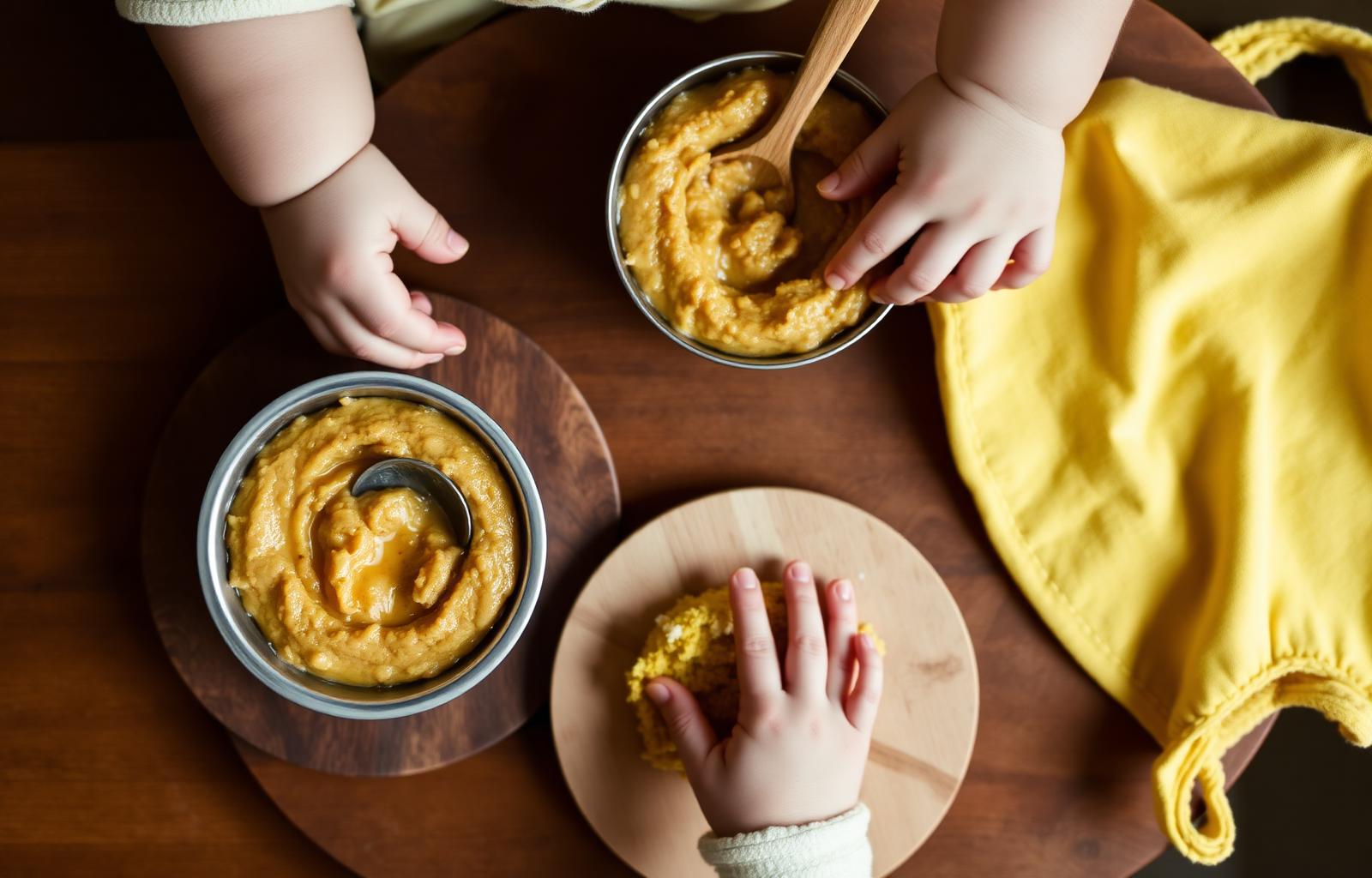
Starting solids is one of the great joys of the first year. It''s also where parents abroad get the most lost — because the bestselling baby food advice is written for a culture that doesn''t cook the way we do.
You don''t need a new system. You need to share your dinner, mashed.
When to start
Look for signs, not a date. Around 6 months, most babies show:
- Sits up with minimal support
- Holds head steady
- Lost the "tongue-thrust" reflex (food stays in, not pushed out)
- Genuinely interested in your food — eyes tracking your spoon, hand reaching out
If they''re premature, count from the due date, not the birthday. Talk to your paediatrician if it''s borderline.
The two approaches — and why "both" is the right answer
The Indian first-foods toolkit
You don''t need rice cereal in a box. You have:
- Ragi porridge — iron, calcium, easy on tummies. Day 1 hero.
- Dal water → mashed dal-rice (khichdi) — protein, comfort, perfect.
- Mashed banana, papaya, sapota, stewed apple, pear
- Mashed sweet potato or pumpkin with a tiny bit of ghee
- Plain dahi (yogurt) — from 6 months, full fat
- Soft idli, dosa pieces, mashed upma by 7–8 months
- Suji kheer, dalia, oats porridge — gentle, satisfying
Use a small steel katori, a small soft spoon, and a bib that covers everything.
Spices — the part everyone gets wrong abroad
The Western advice is "bland for the first year". For Indian babies, this is neither necessary nor ideal — and creates picky eaters later.
- From day one: a pinch of jeera, hing (asafoetida), haldi, methi.
- From 7–8 months: mild dhania, saunf, ajwain, ginger, garlic in cooked food.
- Hold off: heavy chillies, raw onion, raw garlic until past a year. Not because of harm — just because of stomach comfort.
- Salt: less than 1g/day under age 1. A little is fine in family food; don''t add extra to baby''s portion.
- Sugar and honey: no added sugar in the first year. No honey before 12 months — risk of infant botulism. This one is strict.
A tiny pinch of jeera in your baby''s khichdi is not "spicy". It''s flavour. It''s how they learn your family''s food.
The allergen conversation
Current evidence: introduce common allergens early and often, between 4–11 months, to reduce allergy risk.
- Egg (well cooked, yolk first then white)
- Peanut (smooth peanut butter thinned with water — never whole nuts)
- Dairy (curd, paneer — full milk as a drink only after 1 year)
- Wheat (a small piece of soft roti)
- Sesame (til), soy, fish
Introduce one new food at a time, in the morning, and watch for 2–3 days for rash, vomiting, or unusual fussiness. If there''s a strong family history of allergy, talk to your paediatrician first.
A sample first week
- Day 1–3: 2 tsp ragi porridge, once a day, mid-morning
- Day 4–6: 2 tbsp mashed banana, once a day
- Day 7–10: Add mashed dal-rice with a drop of ghee at lunchtime
- By week 2–3: Two meals a day, three different foods rotating
Milk (breast or formula) is still the main meal until 12 months. Solids are practice, not replacement, in the first months.
When to worry
- Persistent gagging vs. choking — gagging is loud and self-correcting, choking is silent. Learn the difference (and infant CPR) before you start.
- Reflux or vomiting after every feed
- No interest in food past 8 months
- Severe constipation that doesn''t resolve with prunes, pear, water
Otherwise: relax. Mess on the floor is the sign things are going well.
Found this useful? Share it with a parent who needs it.
You might also find helpful

Note. This content is for general educational purposes only and is not a substitute for personalised medical advice. Always consult your own doctor about anything specific to you or your child. Read our full Disclaimer.